

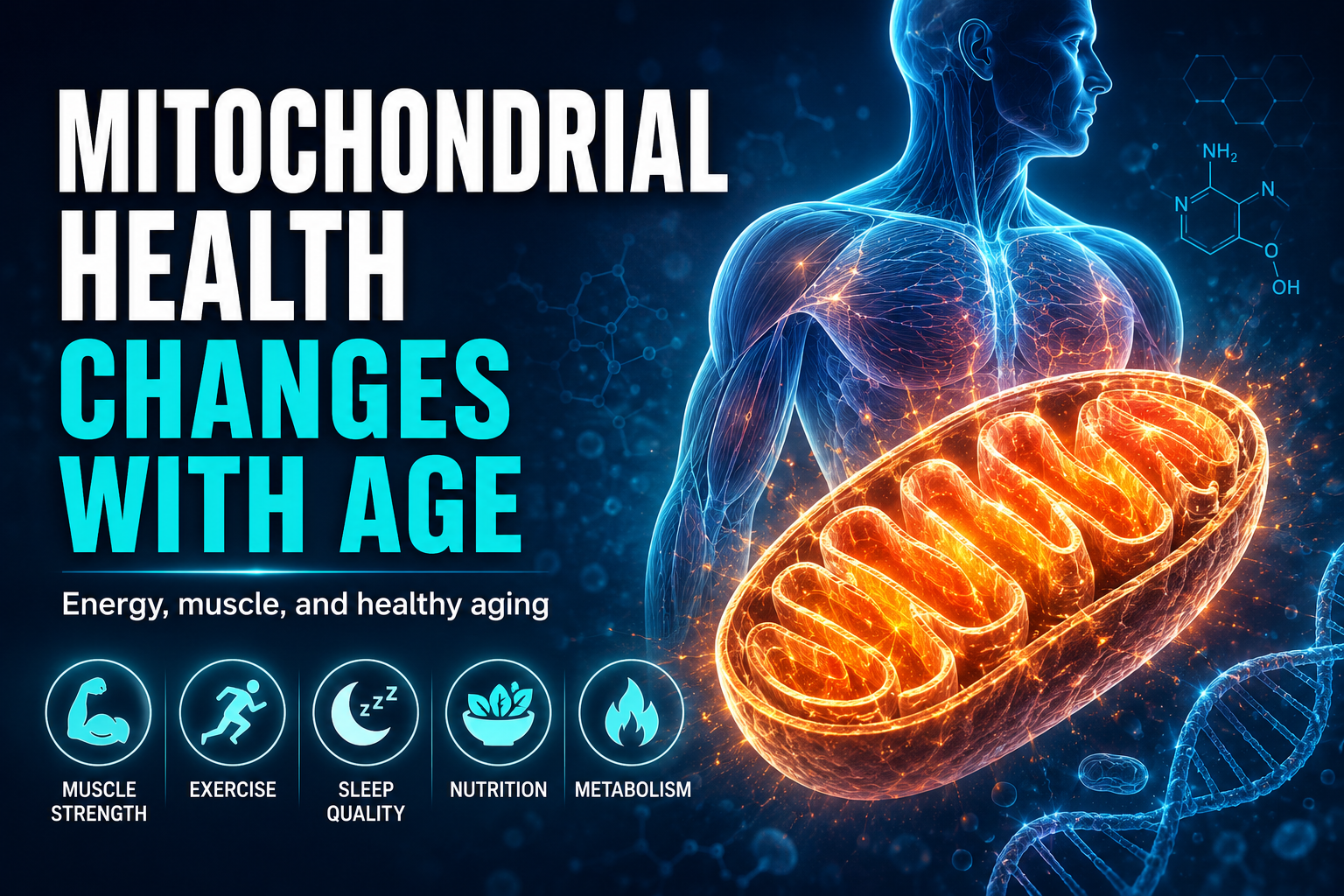
Getting older does not automatically mean losing your energy or physical capability. However, aging is associated with changes across many biological systems, including muscle, metabolism, cellular repair, and mitochondrial function.
Because mitochondria are involved in cellular energy production, researchers have extensively studied their role in aging.
Understanding this relationship can help explain why maintaining physical activity, adequate nutrition, sleep, and metabolic health becomes increasingly important over time.
Key Takeaways
- Aging is associated with changes in mitochondrial function and cellular metabolism.
- Mitochondria are important for energy production in tissues with high energy demands.
- Muscle health and physical activity are closely connected to mitochondrial function.
- Exercise can stimulate beneficial mitochondrial adaptations.
- Healthy aging involves multiple systems, not mitochondria alone.
What Happens to Mitochondria as We Age?
Mitochondrial function can change with age.
Researchers have observed age-related changes in mitochondrial quantity, quality, dynamics, energy production, and cellular signaling.
These changes are not identical in every person and can be influenced by lifestyle, health status, physical activity, and other biological factors.
Why Does Mitochondrial Health Matter for Aging?
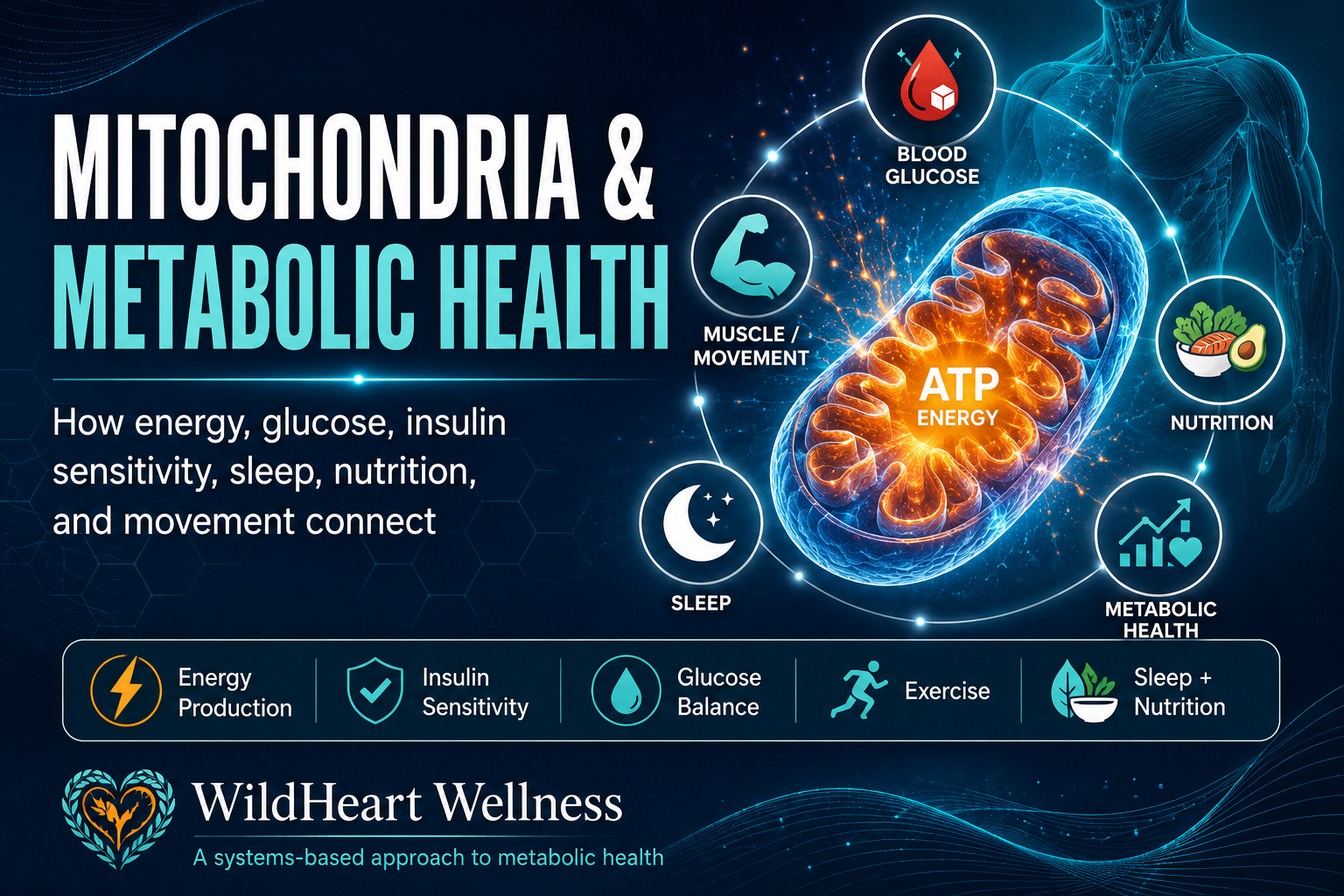
Mitochondria support the energy requirements of cells throughout the body.
Muscles, the brain, and other metabolically active tissues require substantial amounts of energy.
Changes in mitochondrial function may therefore be relevant to physical performance, recovery, and aspects of healthy aging.
Mitochondria and Muscle Health
Muscle is particularly important as you age.
Regular physical activity, especially resistance and aerobic exercise, can stimulate adaptations in muscle mitochondria and support physical function.
Maintaining muscle strength and activity is therefore an important part of a healthy aging strategy.
Can Lifestyle Support Mitochondrial Health?
Several foundational habits are associated with better overall metabolic and physical health:
- Regular exercise
- Strength training
- Adequate protein and balanced nutrition
- Consistent sleep
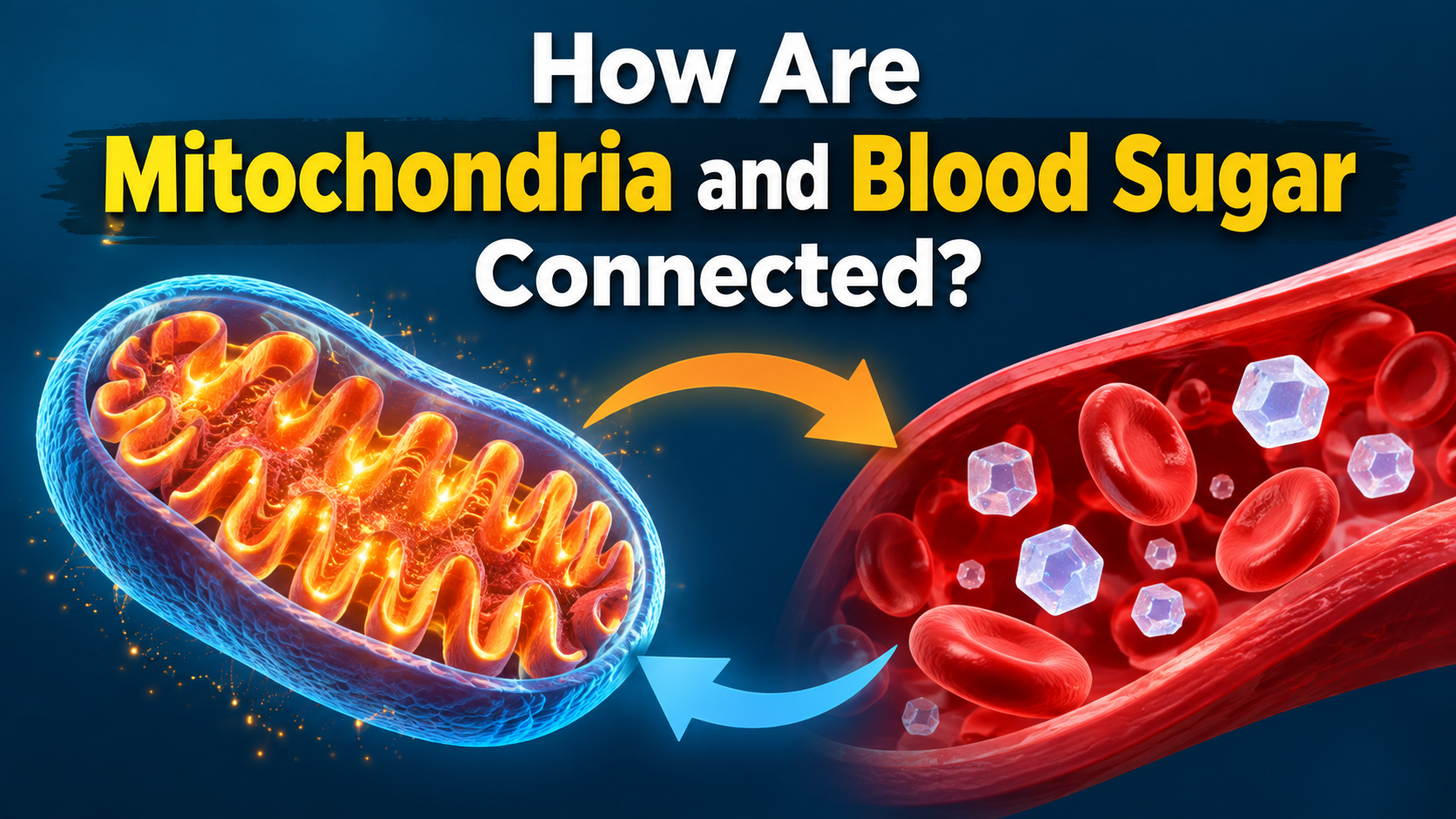
- Healthy metabolic function
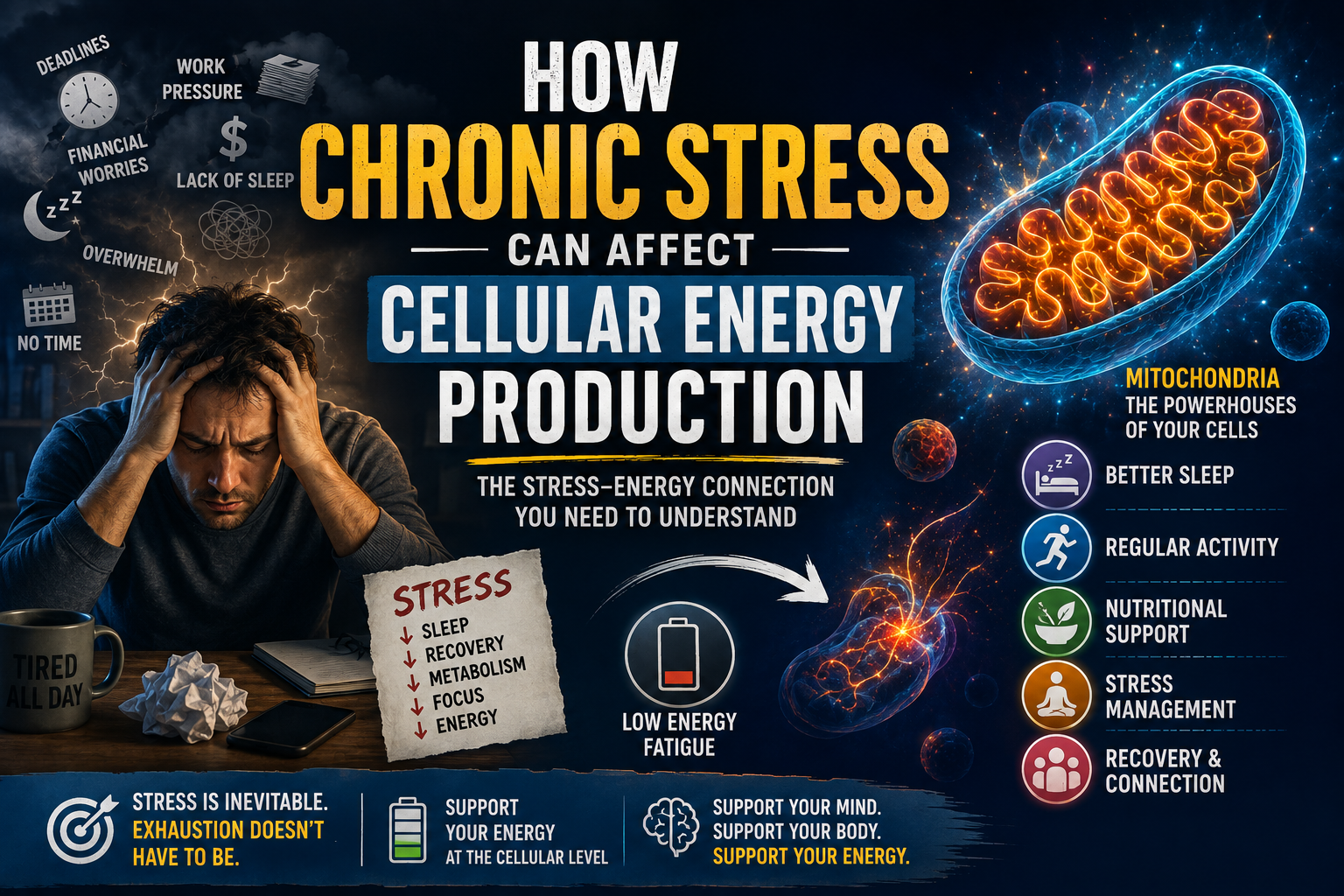
- Stress management
- Avoiding prolonged inactivity
These habits support much more than mitochondria. They contribute to whole-body health.
Mitochondria and Healthy Aging
Healthy aging is not about trying to stop biological aging.
It is about supporting the systems that help you remain physically capable, mentally engaged, and metabolically healthy as you get older.
Mitochondrial function is one piece of that larger picture.
Final Thoughts
Your energy and physical capacity can change with age, but aging does not have to mean accepting constant fatigue or declining function as inevitable.
Supporting movement, muscle, sleep, nutrition, and metabolic health provides a stronger foundation for healthy aging.
WildHeart Wellness’s Age Fiercely approach focuses on personalized wellness and the interconnected factors that influence how you feel and function over time.