

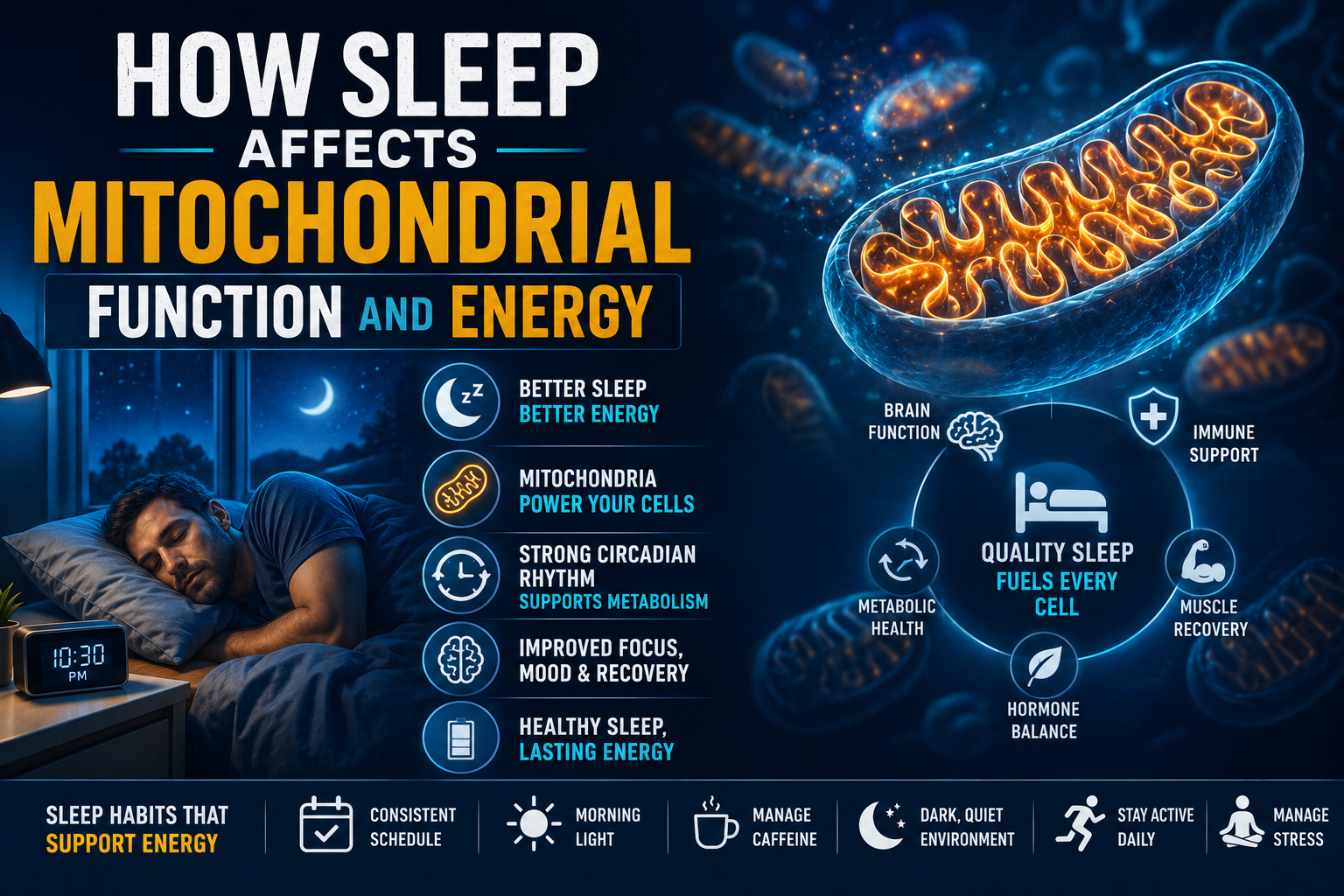
Sleep is often described as a time when the body rests. But biologically, sleep is an active period involving regulation, repair, memory, metabolism, and recovery.
Researchers have also investigated the relationship between sleep, circadian rhythms, cellular metabolism, and mitochondrial function.
This connection may help explain why poor sleep can leave you feeling physically and mentally depleted.
Key Takeaways
- Sleep supports numerous processes involved in physical and cognitive health.
- Mitochondria are central to cellular energy production.
- Sleep and circadian rhythms interact with cellular metabolism.
- Poor or disrupted sleep can affect energy, concentration, and metabolic health.
- Improving sleep is an important foundation for supporting overall energy.
Why Does Sleep Matter for Energy?
Sleep helps regulate many biological processes.
During sleep, your body continues managing metabolic activity, nervous system function, immune processes, memory, and physical recovery.
When sleep is consistently disrupted, these systems may not function optimally.
What Is the Mitochondrial Connection?
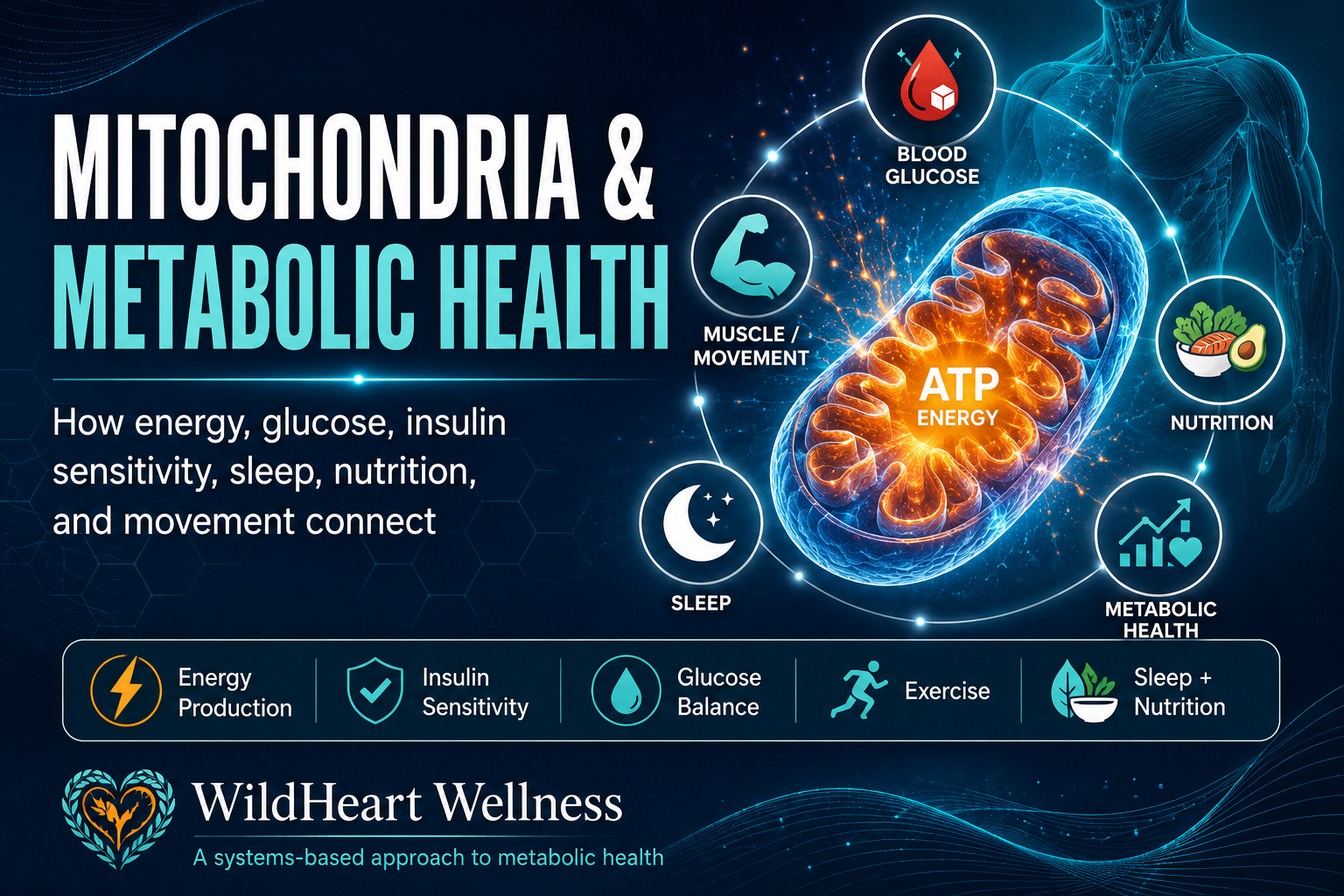
Mitochondria help cells produce usable energy.
Because cellular energy production is closely connected to metabolism and circadian biology, researchers are studying how sleep and mitochondrial processes influence one another.
This appears to be a two-way relationship: sleep and circadian rhythms can influence cellular metabolism, while cellular energy processes can also interact with biological timing systems.
Can Poor Sleep Affect Cellular Energy?
Poor sleep can affect how energized and alert you feel the following day.
Over time, chronic sleep disruption may also influence metabolic regulation and other physiological processes.
However, feeling tired after poor sleep does not necessarily mean your mitochondria are dysfunctional.
Sleep and Your Circadian Rhythm
Your circadian rhythm is an internal biological timing system that helps coordinate sleep, wakefulness, hormones, metabolism, and other processes.
Keeping a relatively consistent sleep-wake schedule can support healthy circadian regulation.
Helpful habits may include:
- Maintaining a consistent bedtime
- Getting morning light exposure
- Limiting stimulating activities close to bedtime
- Creating a dark and comfortable sleep environment
- Managing caffeine timing
- Allowing enough time for sleep
How Can You Support Better Energy Through Sleep?
Start with the basics.
Aim for a consistent sleep schedule, create an environment that supports uninterrupted sleep, stay physically active during the day, and address persistent stress.
If you regularly sleep enough but remain exhausted, consider discussing the issue with a healthcare professional.
Final Thoughts
Sleep is not simply downtime.
It is part of the biological foundation that supports energy, metabolism, brain function, and recovery. Mitochondria are one part of this interconnected system.
Looking at sleep alongside nutrition, stress, movement, metabolic health, and cellular energy can provide a broader perspective on persistent low energy.
WildHeart Wellness takes a personalized systems-based approach to help people understand the factors that may influence how they feel and function.