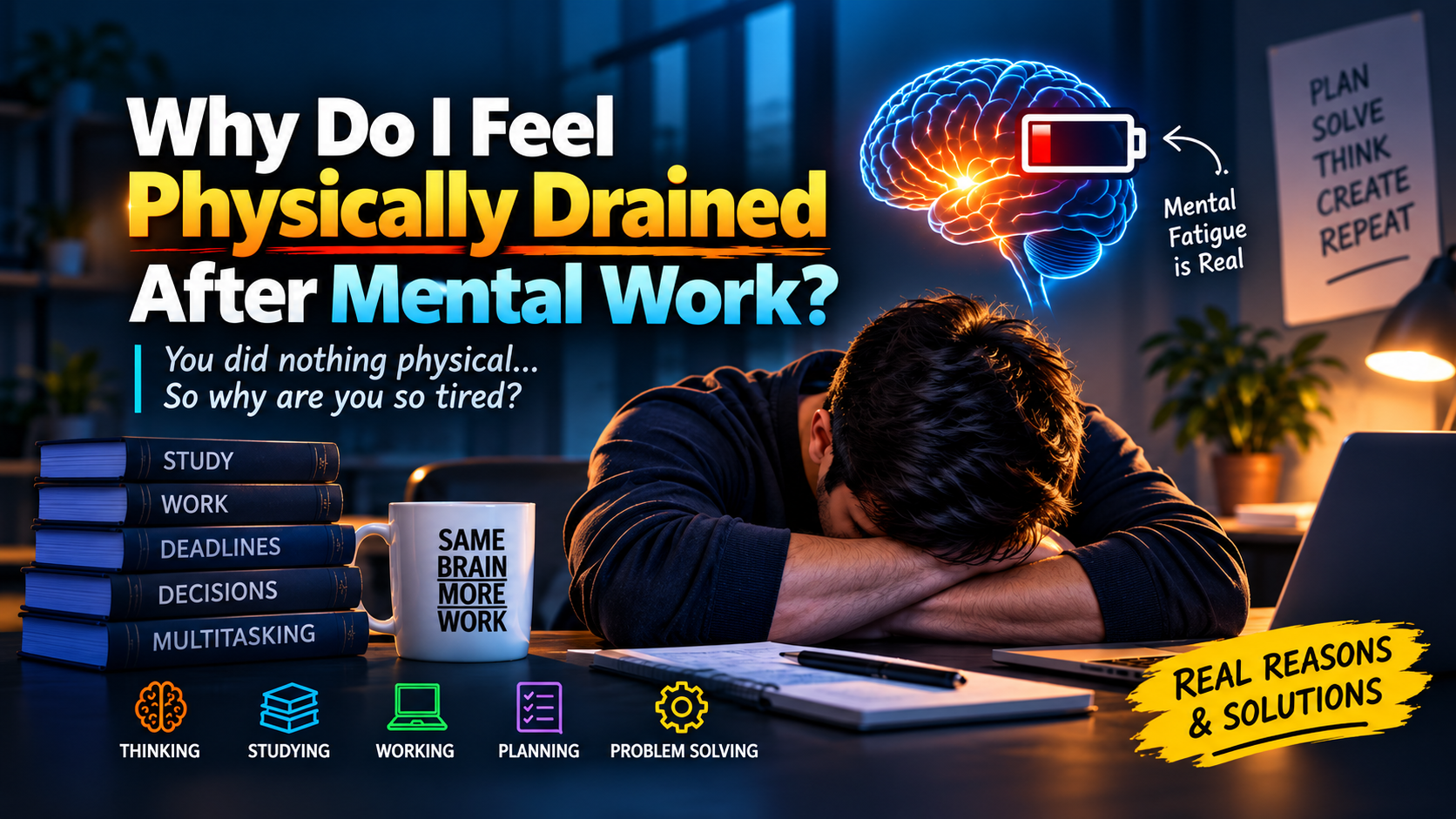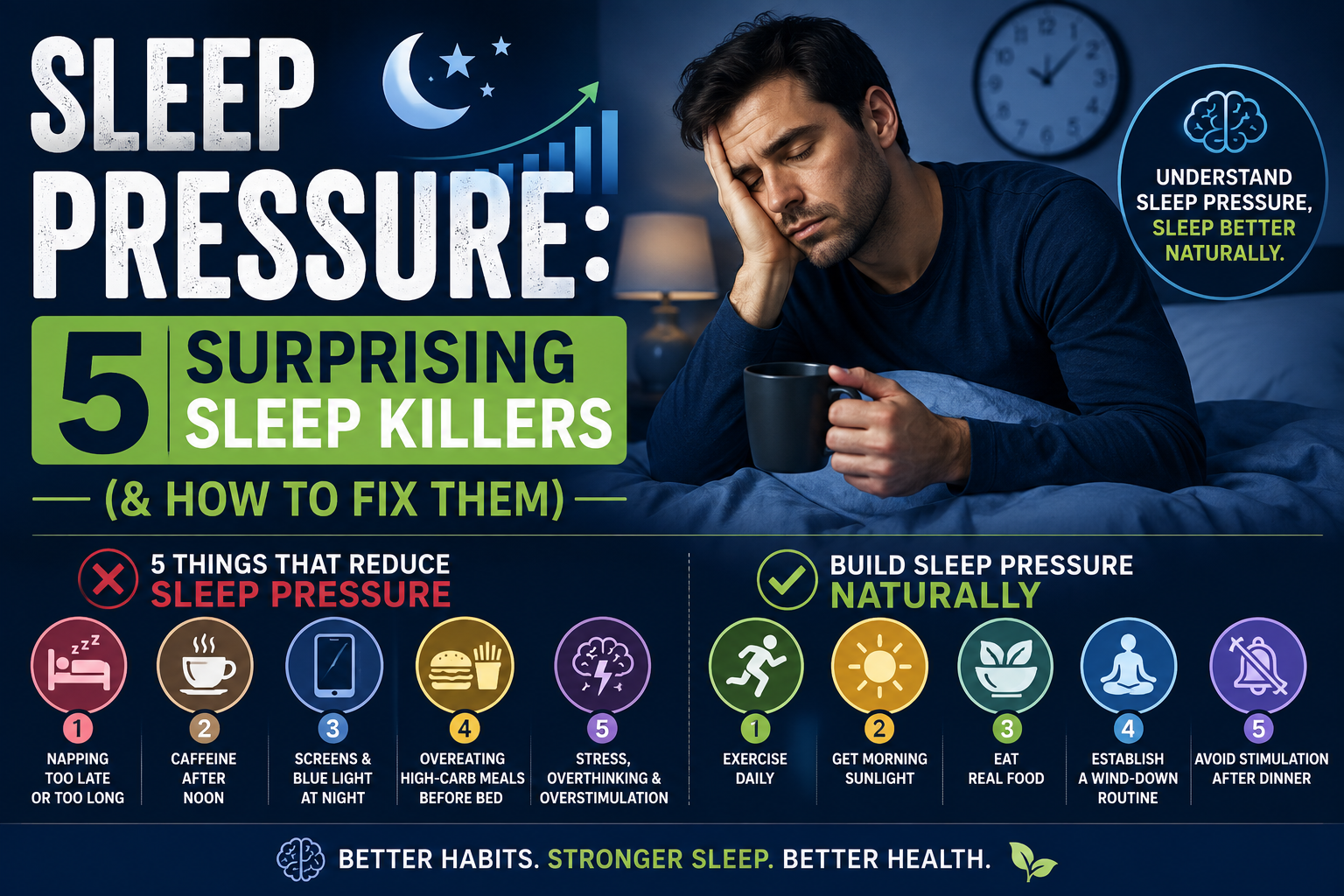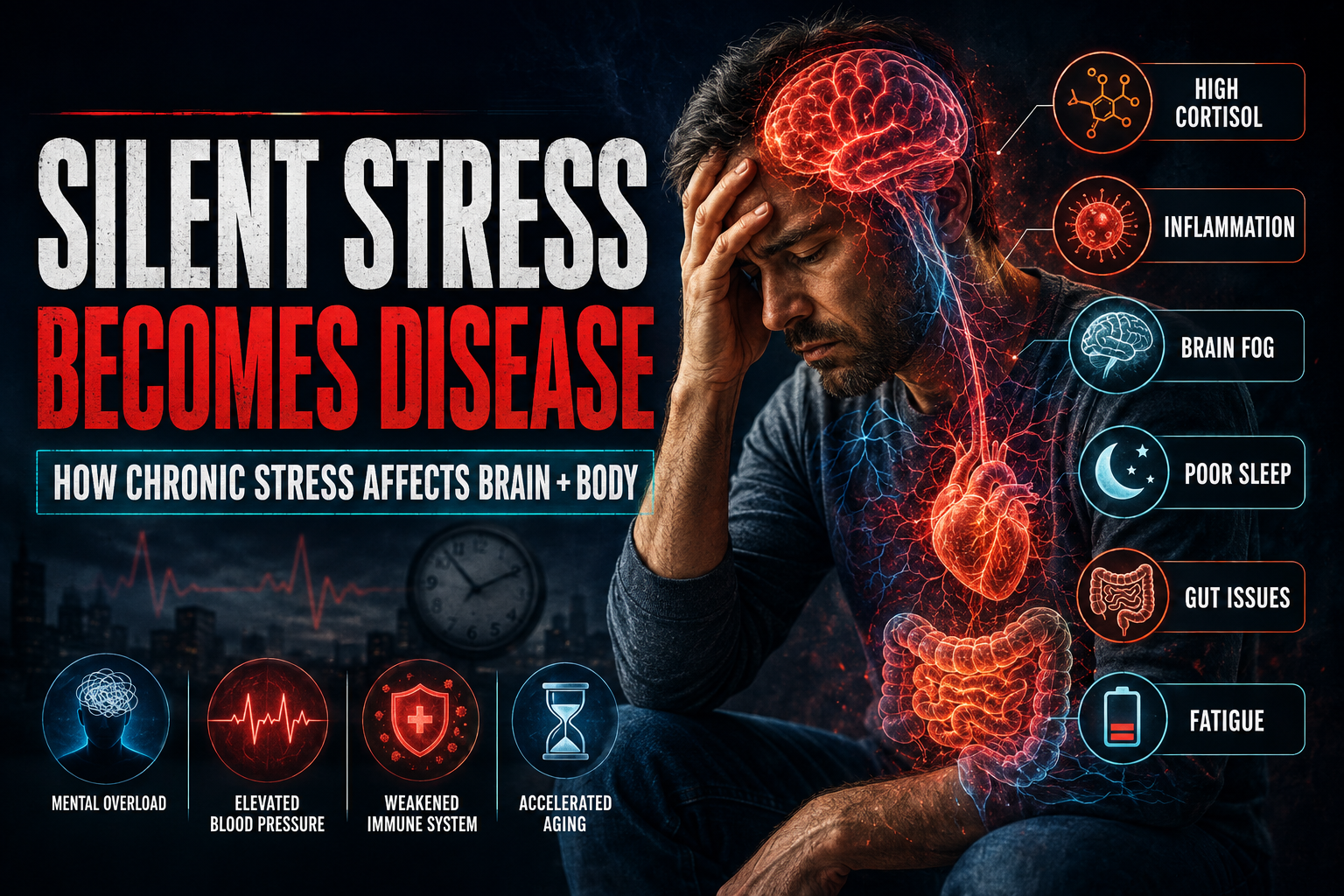


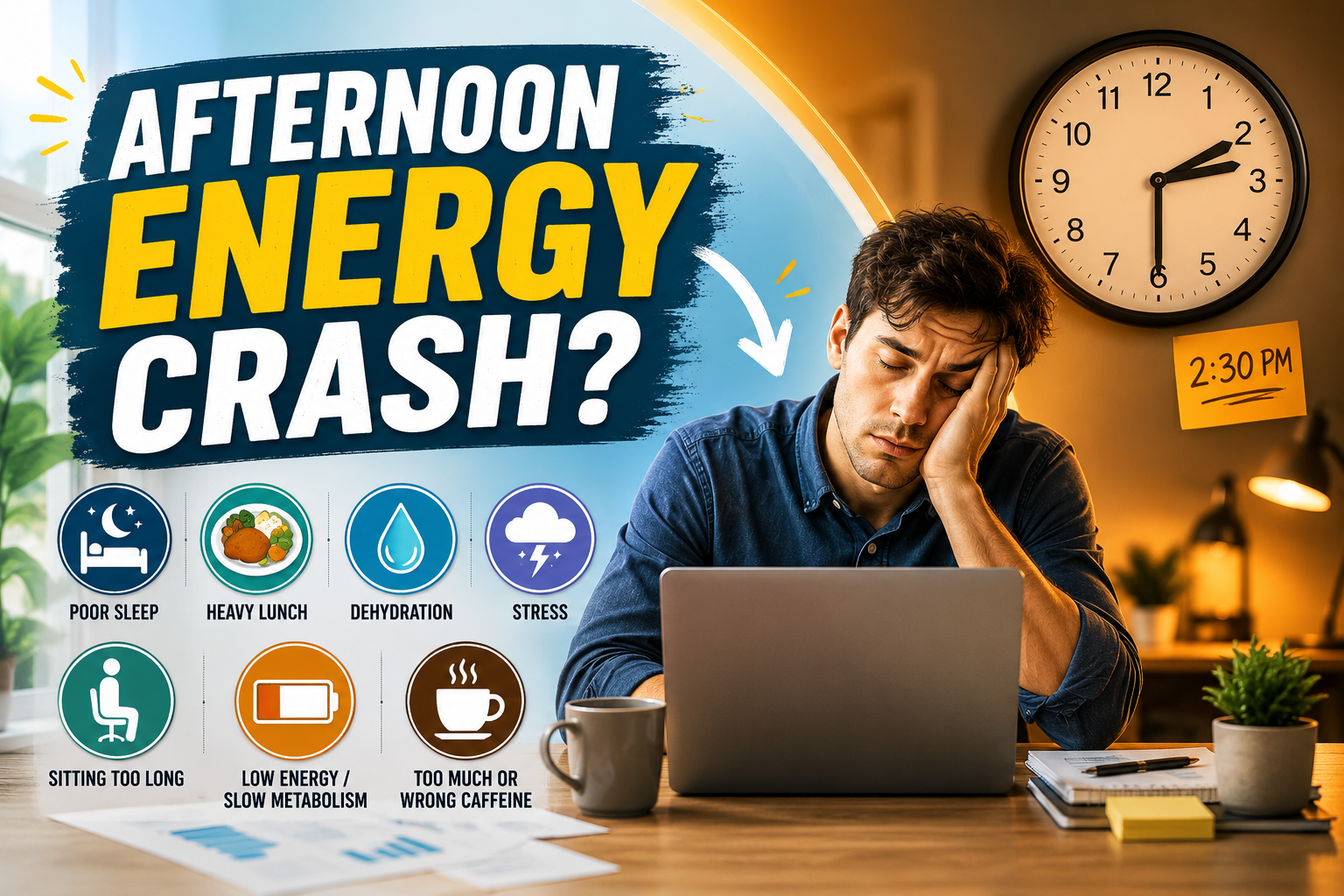
That afternoon energy crash can feel almost predictable. You start the morning feeling productive, then somewhere between lunch and the end of the workday, your energy drops.
You may feel sleepy, mentally foggy, hungry, or unable to concentrate.
An afternoon slump can have several explanations, from sleep and nutrition to stress, activity levels, and metabolic health.
Key Takeaways
- Afternoon fatigue can have multiple contributing factors.
- Poor sleep and inconsistent sleep schedules can affect daytime alertness.
- Large or unbalanced meals may contribute to post-meal energy fluctuations.
- Stress can influence both energy and concentration.
- Hydration and physical activity can affect how you feel during the day.
- Repeated or severe energy crashes may warrant a broader health evaluation.
7 Possible Reasons for an Afternoon Energy Crash
1. You Did Not Get Enough Restorative Sleep
Even if you technically slept for seven or eight hours, poor sleep quality can leave you struggling with daytime fatigue.
An inconsistent sleep schedule may also interfere with your body’s natural circadian rhythm.
2. Your Lunch May Be Contributing
Meals affect how you feel afterward.
A large meal, particularly one dominated by refined carbohydrates with relatively little protein, fiber, or healthy fat, may be followed by noticeable changes in energy for some people.
Rather than eliminating carbohydrates entirely, focus on balanced meals that provide protein, fiber-rich foods, healthy fats, and minimally processed carbohydrate sources.
3. You May Be Dehydrated
Even mild dehydration can make you feel less alert and physically well.
If you are spending the day in a warm environment, exercising, or drinking several caffeinated beverages, paying attention to fluid intake becomes even more important.
4. Stress Can Drain Your Mental Energy
Stress does not only affect emotions. It can also influence concentration, sleep, appetite, and physical recovery.
If you spend the morning constantly switching between tasks, responding to messages, and dealing with pressure, mental fatigue may become more noticeable later in the day.
5. You Have Been Sitting Too Long
Long periods of inactivity can make you feel sluggish.
A short walk, light movement, or brief activity break can help interrupt long periods of sitting and support overall physical activity.
6. Your Energy Metabolism May Need Attention
Your cells depend on coordinated metabolic processes to produce usable energy.
Mitochondria play a central role in cellular energy production, but mitochondrial function is only one part of the larger metabolic picture.
If afternoon crashes are persistent, especially when combined with other symptoms, it may be useful to discuss your overall metabolic health with a qualified professional.
7. You May Be Relying Too Heavily on Caffeine
Caffeine can temporarily increase alertness, but using it to compensate for inadequate sleep or chronic fatigue does not address the underlying issue.
Late-day caffeine can also interfere with sleep in some people, potentially creating another cycle of daytime fatigue.
How Can You Prevent an Afternoon Energy Crash?
Try building a more consistent daily foundation:
- Maintain a regular sleep schedule.
- Eat balanced meals.
- Stay adequately hydrated.
- Include regular movement.
- Take breaks from prolonged sitting.
- Manage ongoing stress.
- Avoid relying on caffeine as your primary energy strategy.
When Should You Look Deeper?
An occasional afternoon slump is common. Persistent, severe, or worsening fatigue is different.
If low energy is affecting your work, exercise, mood, or quality of life, consider discussing it with a healthcare professional rather than assuming you simply need more coffee.
Final Thoughts
Afternoon fatigue can be influenced by several systems working together.
Instead of treating every energy crash with another cup of coffee, consider looking at sleep, nutrition, stress, movement, and metabolic health as connected pieces of the bigger picture.
WildHeart Wellness takes a systems-based approach to understanding health, helping connect symptoms with the broader factors that may influence them.