

When your energy is consistently low, the most useful question may not be “How can I get more energy?”
It may be:
What could be contributing to the way I feel?
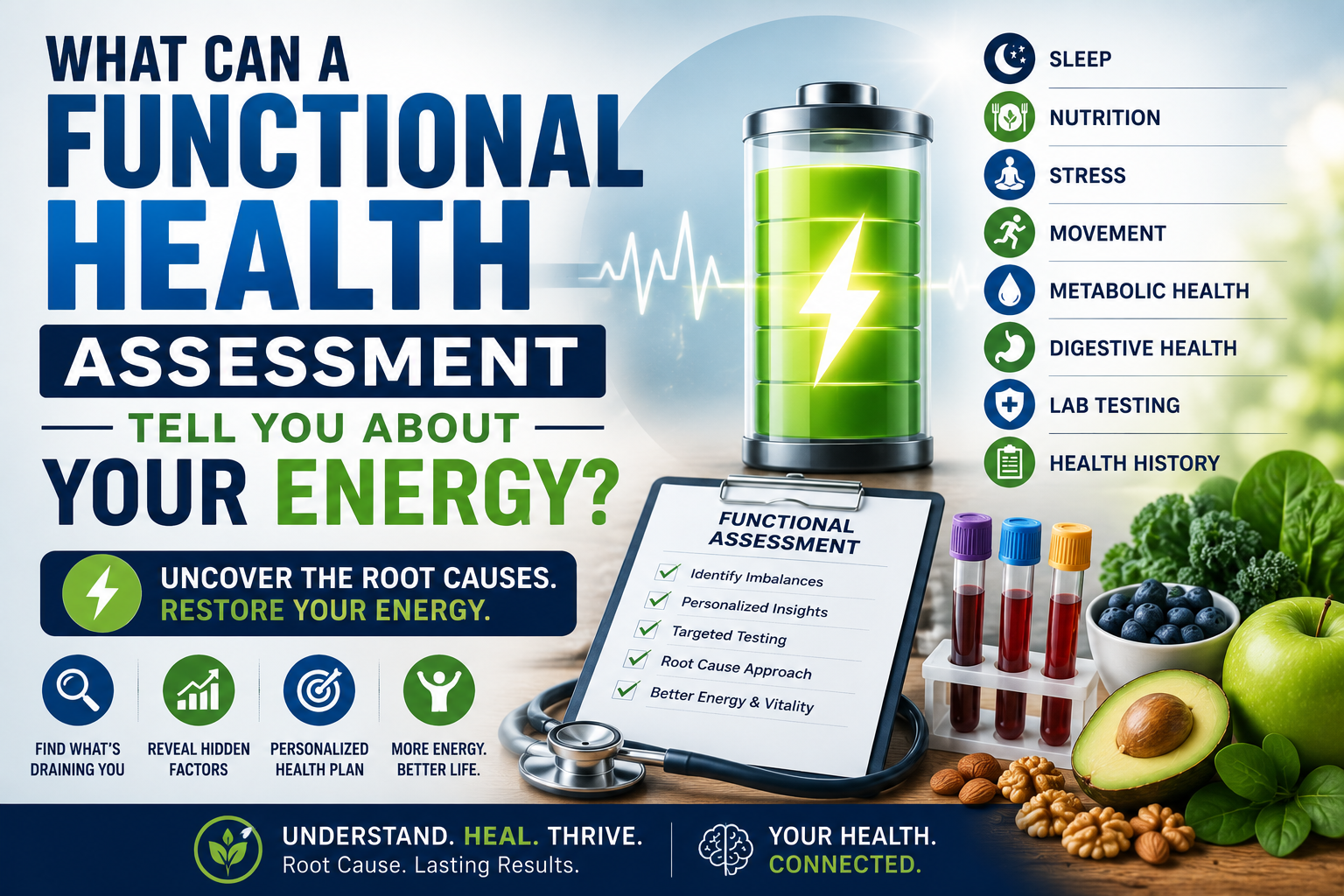
A functional health assessment takes a broader look at factors that may influence energy, including sleep, nutrition, stress, physical activity, metabolic health, medical history, and other relevant systems.
It does not provide a single answer to every fatigue problem, but it can help organize information and identify areas that may deserve further evaluation.
Key Takeaways
- Energy is influenced by multiple interconnected systems.
- A functional assessment starts with your symptoms, history, and health goals.
- Testing may be considered when appropriate.
- No single test can explain every case of fatigue.
- A personalized assessment can help identify areas for further investigation.
Energy Is More Than Calories
We often think about energy in simple terms: food gives us calories, and calories give us energy.
Biologically, it is much more complicated.
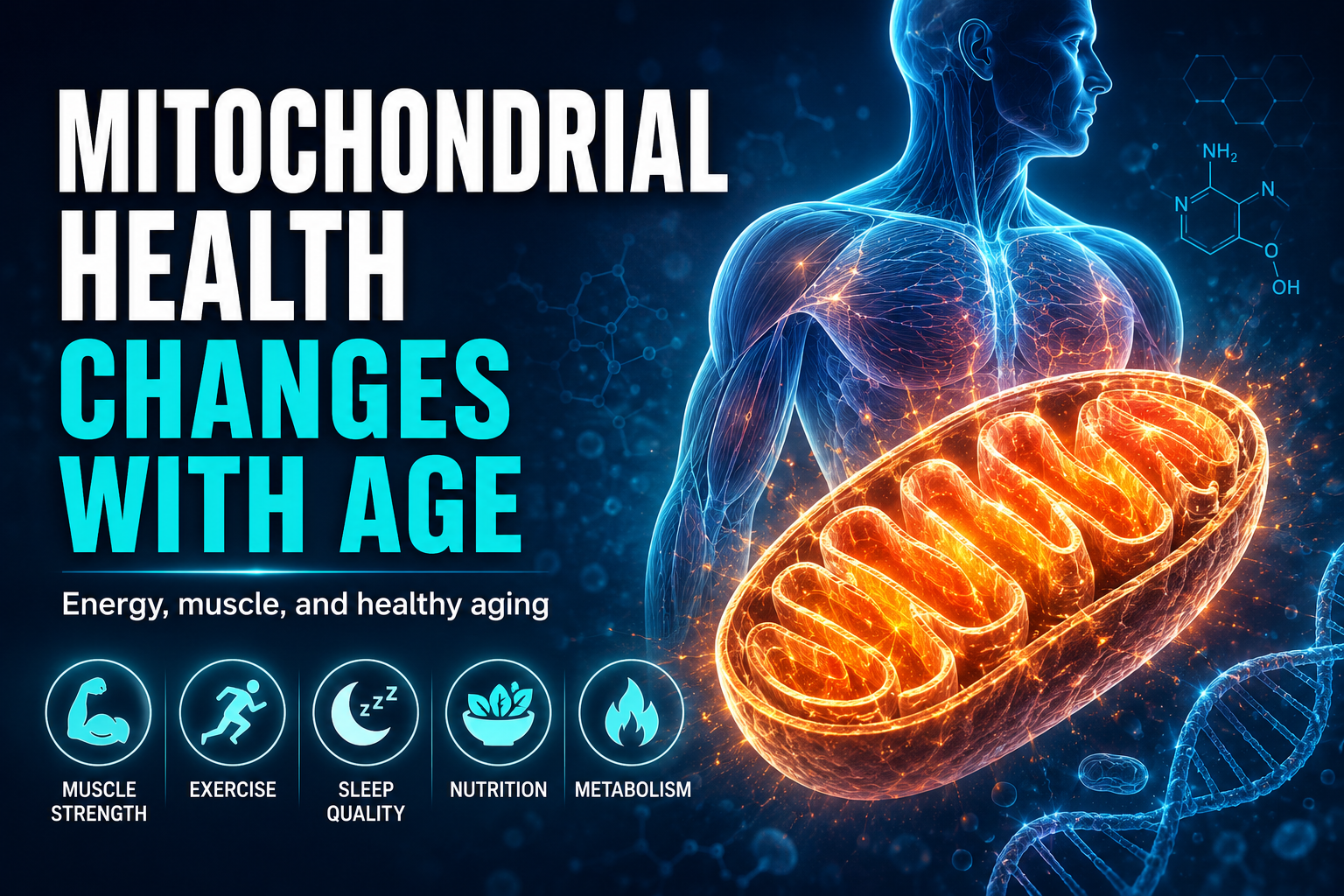
Your cells need ATP to perform their work. Mitochondria play a major role in ATP production, while your body also depends on oxygen delivery, nutrients, hormones, metabolic pathways, sleep, and other systems.
This means low energy can have many possible contributors.
What Does a Functional Health Assessment Look At?
A functional assessment may consider several areas of your health rather than focusing on one symptom.
Depending on your individual situation, this can include:
Sleep
Are you sleeping long enough?
Are you waking frequently?
Do you feel rested when you wake?
Nutrition
Are you eating enough?
Are meals balanced?
Are there nutritional patterns that may be affecting your energy?
Stress
How much stress are you experiencing?
Are you getting enough recovery?
Movement
How active are you?
Do you have enough movement and strength-building activity?
Metabolic health
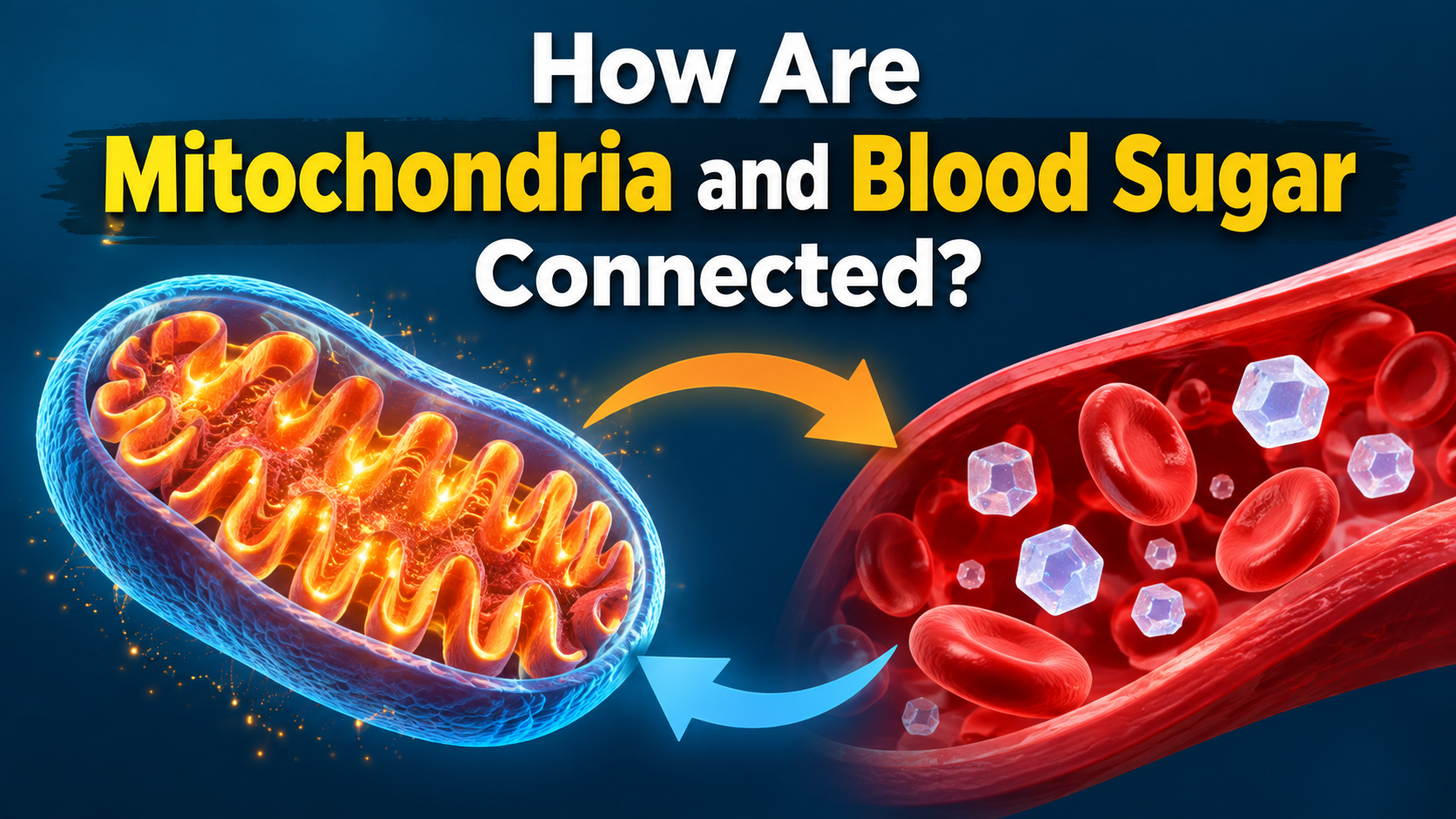
How is your body handling glucose and other fuels?
Are there signs that warrant further evaluation?
Digestive health
Are digestive symptoms affecting your nutrition, comfort, or daily function?
Health history
What has changed?
What medications or supplements are you taking?
What conditions or family history may be relevant?
What About Laboratory Testing?
Testing can sometimes provide useful information.
Depending on symptoms and clinical judgment, a healthcare professional may consider tests related to blood counts, thyroid function, glucose regulation, nutritional status, inflammation, or other areas.
The appropriate tests depend on the person.
A functional assessment should not mean ordering every available test.
The value comes from asking a focused question and selecting appropriate tests to help answer it.
Can It Tell You About Mitochondrial Function?
Mitochondria are an important part of cellular energy production, so mitochondrial health may be relevant when discussing persistent energy problems.
However, symptoms such as fatigue do not automatically indicate mitochondrial dysfunction.
Mitochondrial biology is complex, and direct assessment of mitochondrial function is not part of routine evaluation for every person with fatigue.
The better approach is to consider mitochondrial function within the broader context of metabolism, nutrition, exercise, sleep, and overall health.
Why Personalized Assessment Matters
Imagine two people with the same complaint:
“I’m exhausted all the time.”
One may be sleeping five hours a night.
Another may have an underlying medical condition.
A third may be experiencing significant stress and poor recovery.
Another may have metabolic or nutritional issues.
The symptom is the same.
The context is different.
That is why individualized assessment matters.
What Should You Expect From an Assessment?
A thoughtful assessment should help you better understand:
- What symptoms you are experiencing
- When they started
- What makes them better or worse
- Your sleep and recovery patterns
- Your nutrition and activity
- Relevant health history
- Whether additional testing may be appropriate
- Which areas may deserve attention first
The goal is not simply to produce a long list of abnormalities.
The goal is to create a clearer picture.
When Should You Consider a Health Assessment?
Consider discussing an assessment with a qualified healthcare professional when low energy:
- Persists despite adequate rest
- Interferes with work or daily life
- Affects exercise or recovery
- Comes with brain fog or other persistent symptoms
- Changes significantly without an obvious reason
- Continues despite reasonable lifestyle improvements
Persistent or unexplained fatigue should receive appropriate medical evaluation.
Understand the Pattern Behind Your Energy
Energy is influenced by many systems working together.
Sleep affects recovery.
Nutrition provides fuel and nutrients.
Movement influences metabolic and mitochondrial adaptation.
Stress affects multiple physiological pathways.
Metabolic health influences how the body handles energy.
A functional health assessment can bring these pieces together.
WildHeart Wellness uses a personalized, systems-based approach to help people better understand the factors connected to their health and energy.
Frequently Asked Questions
What is a functional health assessment?
It is a broader health evaluation that considers symptoms, lifestyle, health history, and potentially relevant testing to understand patterns that may contribute to a person’s health concerns.
Can a functional assessment find the cause of fatigue?
It may help identify potential contributors, but fatigue has many possible causes and no assessment can guarantee one definitive explanation.
What tests might be used for low energy?
Testing depends on symptoms and clinical context. A healthcare professional may consider blood counts, thyroid function, glucose-related markers, nutritional status, or other targeted evaluations.
Does low energy mean I have mitochondrial dysfunction?
No. Fatigue is nonspecific and can result from many conditions and lifestyle factors.
What is the goal of a functional assessment?
The goal is to build a more complete understanding of the individual’s health and identify areas that may warrant attention or further evaluation.