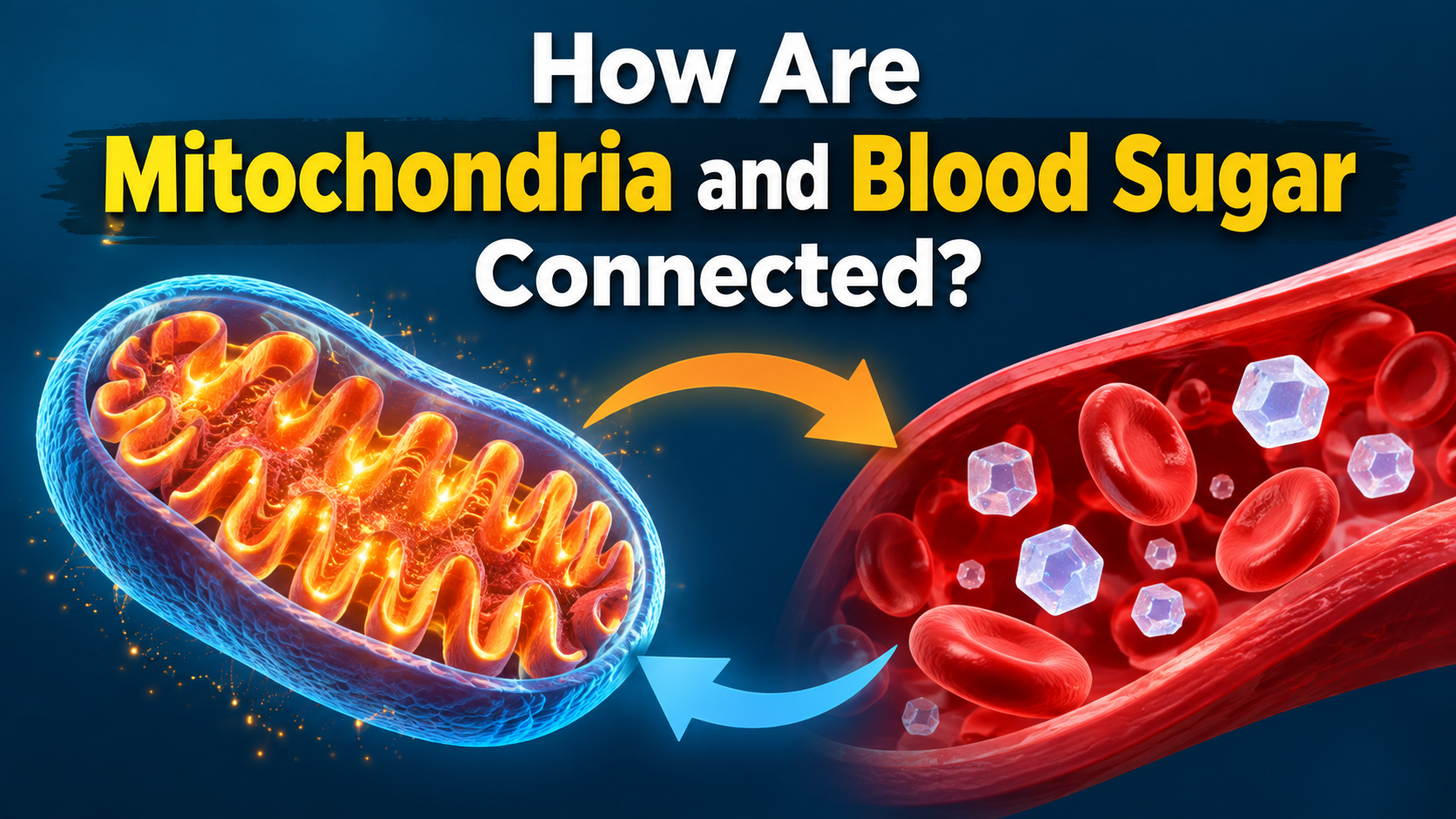


Metabolic health is about how effectively your body manages energy, nutrients, blood glucose, fats, and other processes involved in maintaining normal physiological function.
Mitochondria are central to this process because they help cells convert nutrients into usable energy.
Research has found important relationships between mitochondrial function and insulin sensitivity, glucose metabolism, and metabolic disease. However, scientists continue to investigate whether mitochondrial dysfunction is a cause, consequence, or interacting factor in metabolic problems.
Key Takeaways
- Mitochondria are central to cellular energy metabolism.
- Metabolic health involves much more than body weight.
- Mitochondrial function and insulin sensitivity are closely studied together.
- Mitochondrial dysfunction and metabolic disease can influence interconnected pathways.
- Lifestyle factors such as movement, nutrition, and sleep are important parts of metabolic health.
What Is Metabolic Health?
Metabolic health refers to how well your body regulates processes such as:
- Blood glucose
- Insulin sensitivity
- Blood pressure
- Blood lipids
- Energy storage and use
- Body composition
You can have metabolic concerns even if your weight appears normal, and body weight alone cannot provide a complete picture of metabolic health.
Where Do Mitochondria Come In?
Mitochondria help cells convert fuels derived from food into usable energy.
They can metabolize carbohydrates, fats, and other substrates through interconnected pathways.
Skeletal muscle is particularly important because it is a major site of glucose disposal and energy expenditure.
When mitochondrial function, fuel oxidation, and metabolic signaling become altered, researchers have observed associations with insulin resistance and other metabolic problems.
Mitochondria and Insulin Sensitivity
Insulin helps regulate how the body handles glucose and other nutrients.
Research has identified mitochondrial differences in people with insulin resistance and type 2 diabetes.
However, the relationship is complicated.
Some evidence suggests impaired mitochondrial function may contribute to insulin resistance, while other findings suggest metabolic dysfunction can itself affect mitochondria.
Current research therefore supports a relationship without reducing metabolic disease to a single mitochondrial explanation.
Why Muscle Health Matters
Skeletal muscle plays a major role in whole-body metabolism.
Regular physical activity stimulates mitochondrial adaptations and can improve the body’s ability to use energy.
This is one reason movement is an important part of metabolic health even when weight loss is not the goal.
Strength training and aerobic activity can provide different but complementary metabolic benefits.
Nutrition and Mitochondrial Function
Your mitochondria depend on nutrients and metabolic substrates to produce energy.
A balanced eating pattern can support overall metabolic health by providing adequate protein, fiber, vitamins, minerals, and other nutrients.
Rather than focusing on a single “mitochondrial food,” it is generally more useful to consider the overall dietary pattern.
Sleep and Metabolic Health
Sleep is another important part of metabolic regulation.
Poor or insufficient sleep can affect appetite, glucose regulation, stress hormones, and daily activity.
Because metabolic health is influenced by multiple systems, improving sleep may be just as relevant to the bigger picture as changing food choices.
What Can Affect Mitochondrial Health?
Mitochondrial function changes in response to factors including:
- Physical activity
- Nutrition
- Aging
- Metabolic conditions
- Oxidative stress
- Cellular damage
- Genetic factors
- Environmental influences
The good news is that mitochondria are dynamic structures. They can adapt to changes in energy demand and environmental conditions.
The Bigger Picture
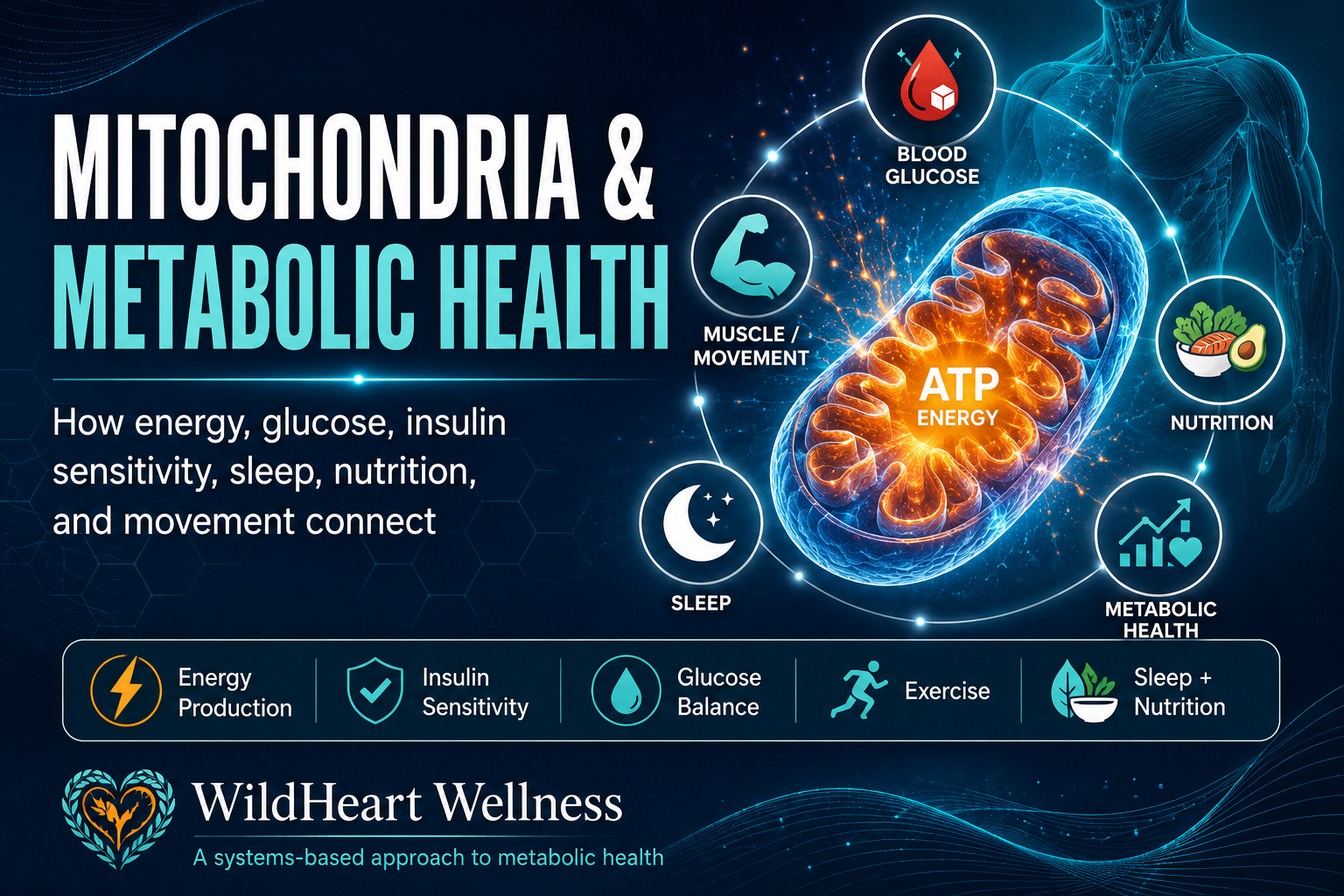
Metabolic health cannot be reduced to mitochondria alone.
Blood glucose, insulin sensitivity, physical activity, nutrition, sleep, stress, body composition, genetics, and other factors all interact.
This systems perspective is important when trying to understand why one person may experience metabolic problems while another does not.
WildHeart Wellness takes a personalized functional approach that considers interconnected systems rather than treating metabolic health as a single number.
Frequently Asked Questions
Do mitochondria affect metabolism?
Yes. Mitochondria are central to cellular energy metabolism and help process fuels such as carbohydrates and fats.
Are mitochondrial problems the cause of insulin resistance?
Not necessarily. Research shows an important relationship, but whether mitochondrial dysfunction is a cause, consequence, or both remains an area of scientific investigation.
Can exercise support mitochondrial health?
Regular exercise stimulates adaptations in mitochondrial function and capacity and is an important part of metabolic health.
Is metabolic health only about weight?
No. Metabolic health includes glucose regulation, insulin sensitivity, blood pressure, blood lipids, body composition, and other factors.
Can lifestyle influence mitochondrial function?
Yes. Physical activity, nutrition, sleep, and other lifestyle factors can influence mitochondrial biology and metabolic function.