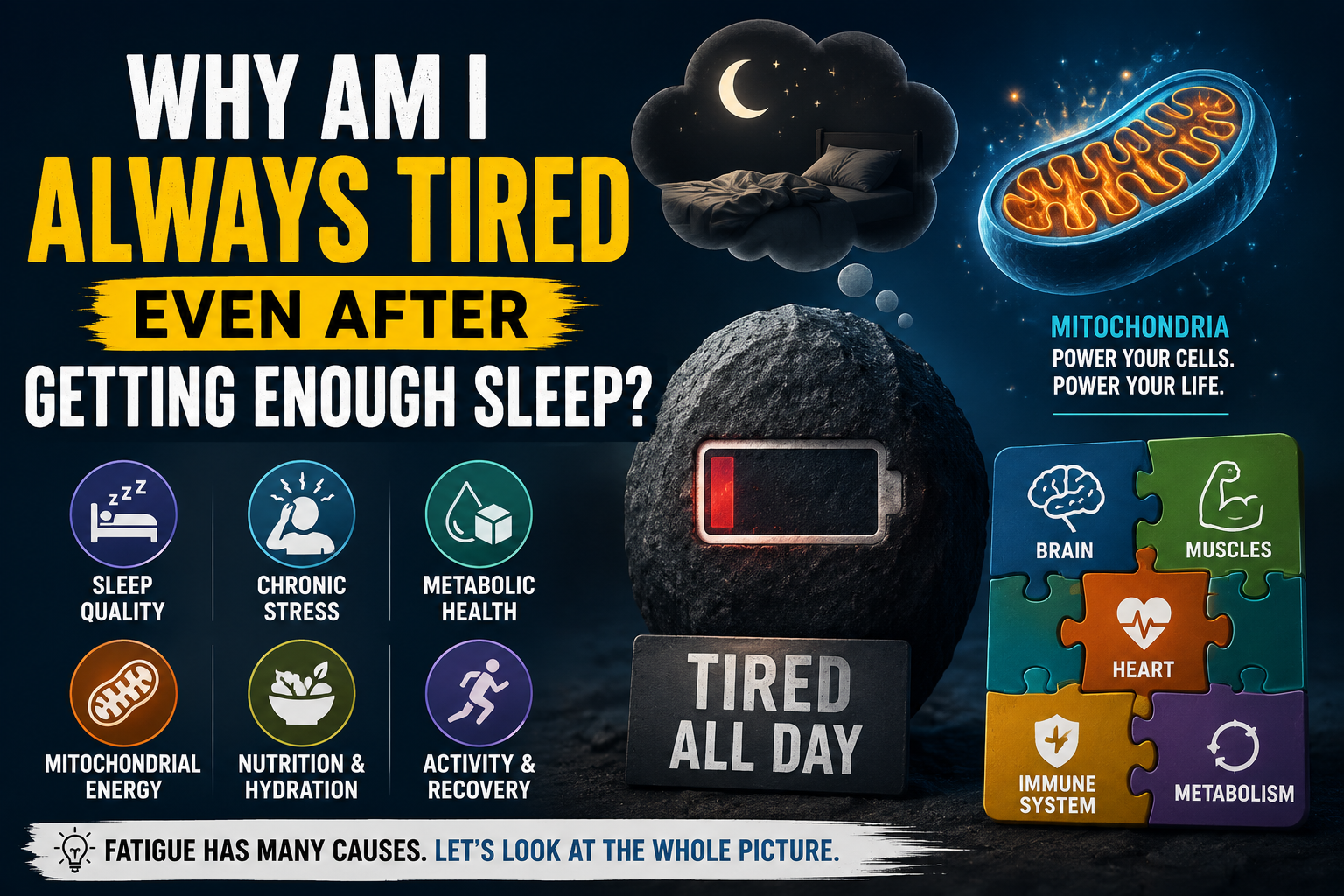


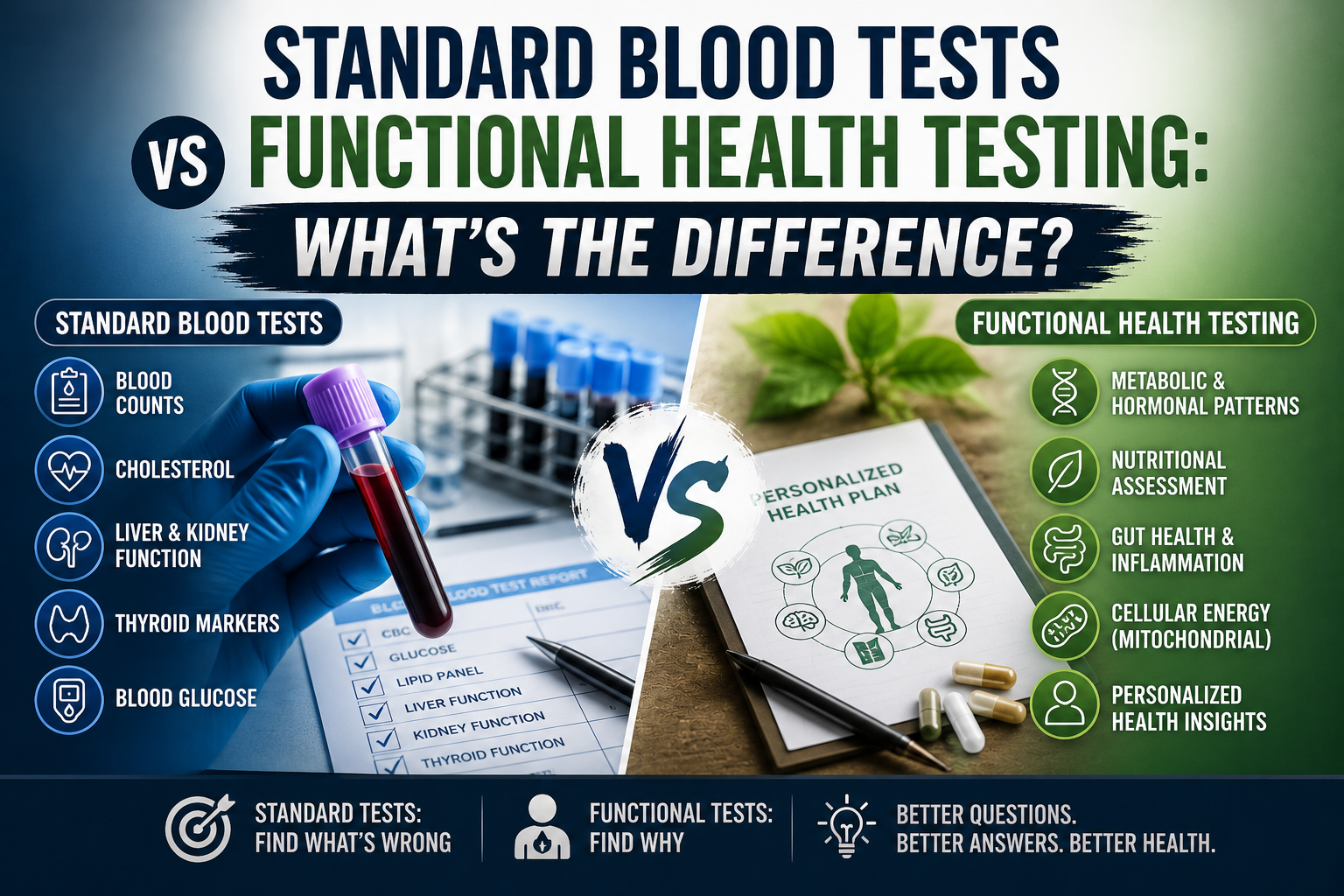
Blood tests are an important part of modern healthcare. They can provide valuable information about many aspects of your health, from blood counts and glucose to cholesterol and organ function.
Functional health testing approaches assessment from a different perspective. Rather than replacing conventional medical testing, functional assessments may be used to explore additional aspects of health depending on the person’s symptoms, goals, and clinical context.
Understanding the difference can help you have a more informed conversation with your healthcare provider.
Key Takeaways
- Standard blood tests provide important information about established clinical markers.
- Functional health testing may evaluate additional areas depending on the assessment.
- Functional testing should complement appropriate medical care rather than replace it.
- Not every person needs extensive testing.
- The right tests depend on symptoms, health history, goals, and clinical judgment.
What Are Standard Blood Tests?
Standard blood tests are commonly used to evaluate measurable aspects of health.
Depending on the situation, testing may examine:
- Blood glucose
- Cholesterol
- Blood cell counts
- Liver function
- Kidney function
- Thyroid-related markers
- Nutritional markers
- Other clinically relevant biomarkers
These tests can be extremely useful for identifying abnormalities and monitoring known conditions.
What Is Functional Health Testing?
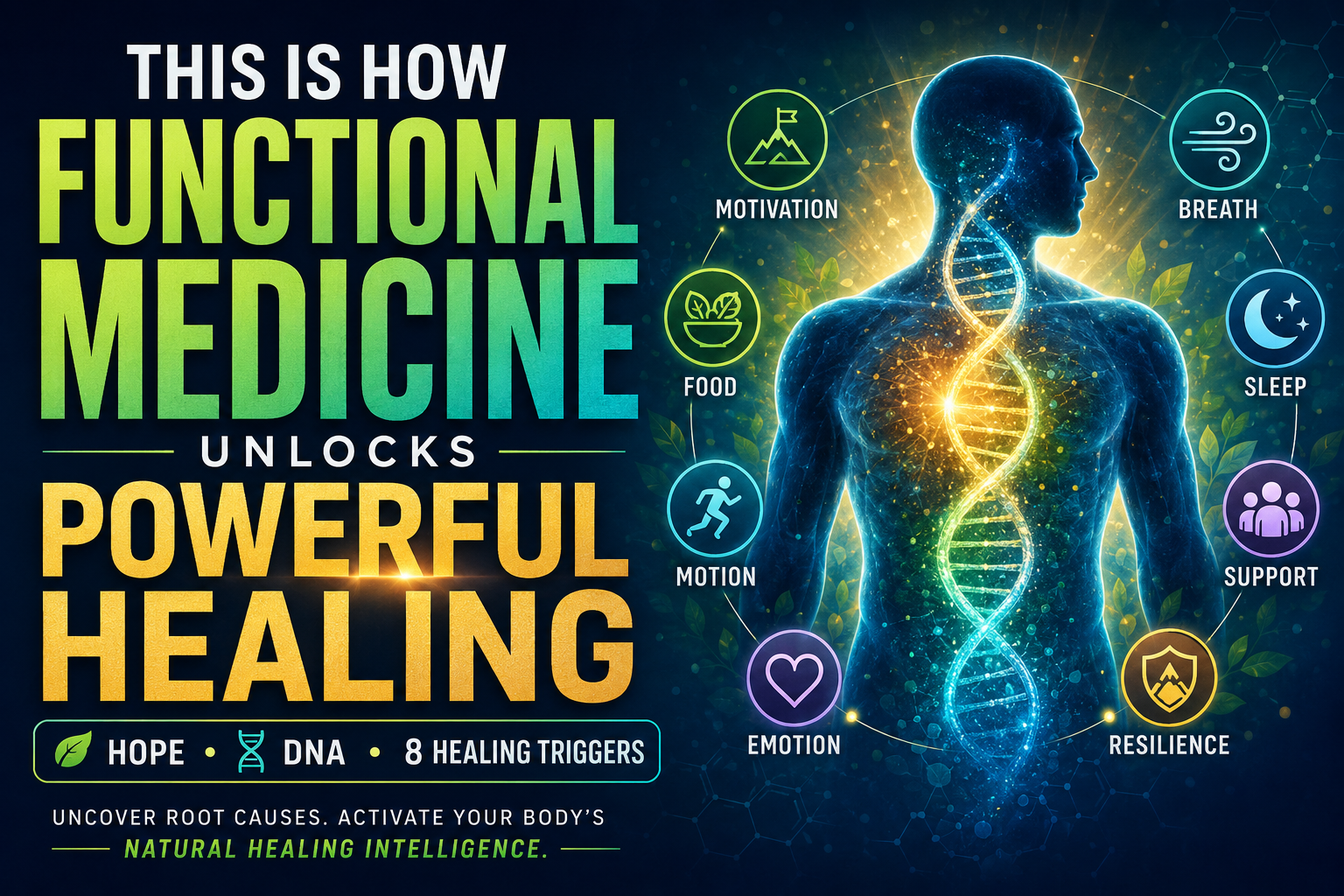
Functional health testing generally refers to a broader approach to evaluating health patterns and physiological function.
Depending on the practitioner and program, this may include additional laboratory assessments, nutritional analysis, metabolic evaluation, genetic information, or other forms of testing.
The purpose is generally to place test results within the context of symptoms, lifestyle, health history, and individual goals.
Standard Testing vs Functional Testing
Standard Blood Testing
Often focuses on:
- Established clinical biomarkers
- Screening
- Diagnosis
- Monitoring
- Disease risk assessment
Functional Health Testing
May focus on:
- Additional physiological patterns
- Personalized health assessment
- Nutritional factors
- Metabolic patterns
- Individual health goals
The two approaches do not necessarily need to compete.
Does Functional Testing Replace Medical Testing?
No.
Functional testing should not be presented as a replacement for appropriate conventional medical evaluation.
If you have significant symptoms or a suspected medical condition, appropriate medical assessment should come first.
Do You Need More Testing?
More tests are not always better.
Testing should have a clear purpose. A good practitioner should be able to explain:
- Why the test is being recommended.
- What information it may provide.
- What limitations it has.
- How the result could influence your plan.
Why Personalized Testing Matters
Two people can have similar symptoms but very different contributing factors.
One person’s fatigue may relate primarily to sleep. Another person’s experience may involve nutrition, stress, metabolic health, medication effects, or another underlying issue.
That is why testing is most useful when interpreted alongside the individual rather than viewed in isolation.
Final Thoughts
Standard blood tests remain an important part of healthcare.
Functional health assessments can potentially add context in appropriate situations, but they should be used thoughtfully and interpreted by qualified professionals.
The goal should not be to order as many tests as possible. It should be to ask better questions and use appropriate information to understand the individual more completely.