


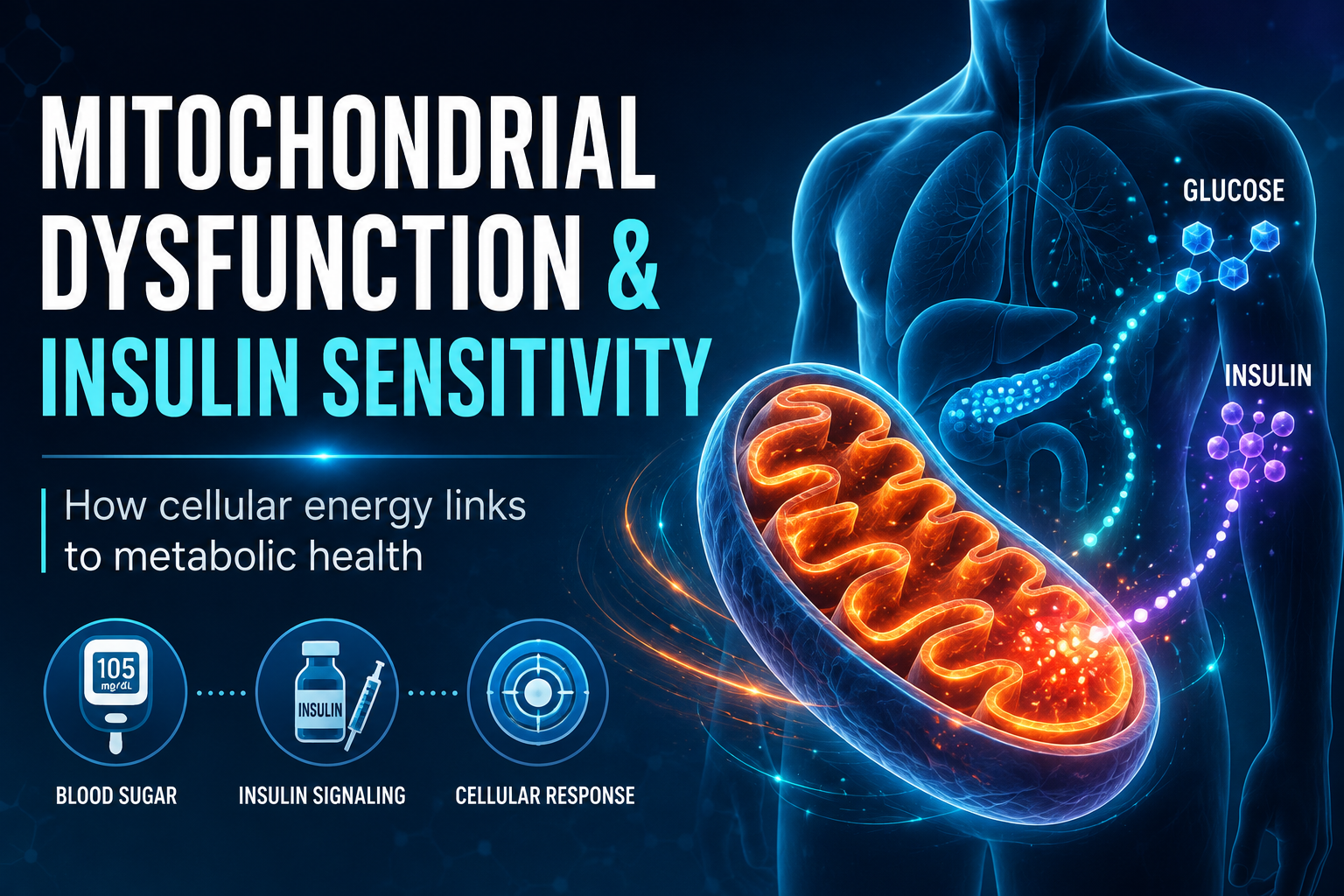
Insulin sensitivity is an important part of metabolic health. It describes how effectively your body’s cells respond to insulin, a hormone that helps regulate blood glucose. Researchers have studied the relationship between mitochondrial function and insulin sensitivity for years. Mitochondria are central to energy metabolism, so changes in mitochondrial activity may interact with pathways involved in glucose and fat metabolism.
However, the relationship is complex, and mitochondrial dysfunction should not be treated as the single explanation for insulin resistance.
Key Takeaways
- Mitochondria play an important role in energy metabolism.
- Research has identified connections between mitochondrial function and insulin sensitivity.
- Insulin resistance has multiple contributing factors.
- Physical activity, nutrition, sleep, body composition, and metabolic health can all influence insulin sensitivity.
- Improving metabolic health requires looking at the broader system rather than focusing on mitochondria alone.
What Is Insulin Sensitivity?
Insulin sensitivity refers to how responsive the body’s cells are to insulin.
When cells respond appropriately to insulin, glucose can be managed effectively as part of normal metabolism.
Reduced insulin sensitivity is commonly referred to as insulin resistance.
What Do Mitochondria Have to Do With Metabolism?
Mitochondria help convert nutrients into usable cellular energy.
They are involved in the metabolism of carbohydrates, fats, and other energy substrates.
Because insulin signaling and energy metabolism are closely connected, researchers have investigated whether changes in mitochondrial function are associated with insulin resistance.
Can Mitochondrial Dysfunction Affect Insulin Sensitivity?
Research suggests there can be an important relationship between mitochondrial function and insulin sensitivity.
However, it is not accurate to say that mitochondrial dysfunction automatically causes insulin resistance in every person.
The relationship may involve several interacting processes, including energy metabolism, lipid handling, oxidative stress, inflammation, physical activity, and tissue-specific changes.
What Factors Influence Insulin Sensitivity?
Several lifestyle and physiological factors can influence metabolic health:
Physical Activity
Regular physical activity can support glucose metabolism and insulin sensitivity.
Nutrition
Overall dietary quality and energy balance matter more than one individual food.
Sleep
Poor sleep and circadian disruption can affect metabolic regulation.
Stress
Persistent stress can influence behaviors and physiological processes relevant to metabolic health.
Body Composition
Excess visceral fat is associated with metabolic dysfunction and insulin resistance.
Can You Improve Metabolic Health?
A personalized approach may include:
- Regular movement
- Resistance training
- Cardiovascular exercise
- Balanced nutrition
- Adequate sleep
- Stress management
- Monitoring relevant health markers
The appropriate approach depends on your individual health status.
Final Thoughts
Mitochondria are an important part of the body’s energy system, but metabolic health is much broader than mitochondrial function alone.
If you are concerned about insulin sensitivity, blood glucose, weight changes, or persistent energy problems, a qualified healthcare professional can help determine which assessments may be appropriate.